
Customer Financing for Solar Installers & EPCs
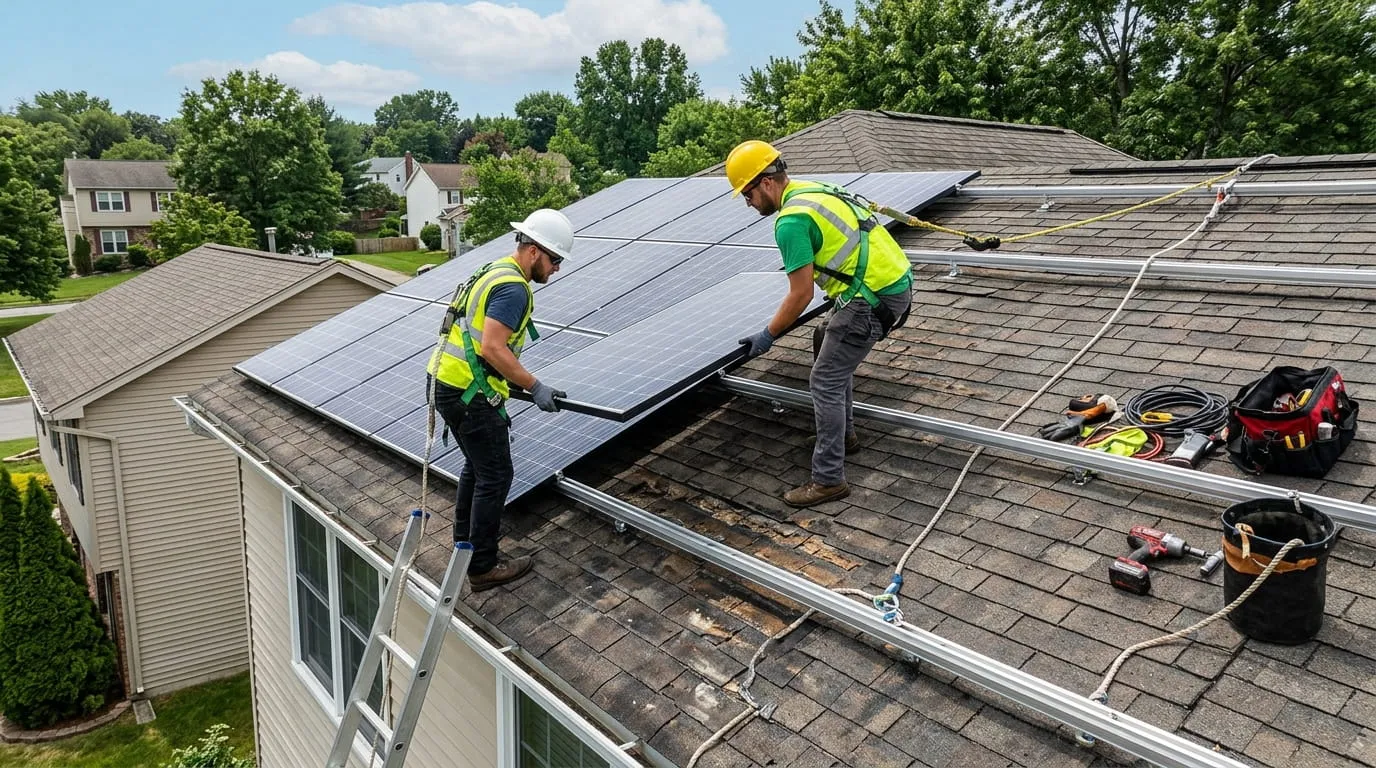
As new solar installations slow, more business is shifting toward removal, repowering, and service. But these projects often come with a significant cost homeowners weren’t expecting. A customer may be ready to move forward with removing or upgrading an aging system, only to hesitate once they see the estimate.
Customer financing for solar installers and EPCs lets your customers pay for removal, repowering, and service work in monthly payments, while your company collects the full contract value upfront through a multi-lender network. There is no such thing as too many ways to close a job, and this adds one without an in-house payment plan.
Get Paid Upfront
Collect the full contract value once the loan is funded, with no receivable to carry and no installments to chase.
Diverse Credit Profiles
One application reaches lenders serving credit from sub-prime to well-qualified, so more of your customers get an offer.
Non-Recourse Financing
Most loans in the network are non-recourse, which means you are not responsible for how the customer repays.
Solar installers and EPCs are increasingly turning to customer financing as demand shifts beyond new installations. From removing aging systems and repowering with new panels and inverters to repairs, service, and full decommissioning, these projects can carry significant upfront costs. Your crews already have the licenses and technical expertise. Financing gives homeowners a manageable way to cover the cost so more projects move forward.
Orphaned solar system financing is a fast-growing piece of this. When the company that sold and installed a system closes, is acquired, or disappears, the homeowner is left with no one to call for a dead inverter or a failing array, and often a billing or performance dispute on top of it. Financing lets you take those service and reactivation jobs that would otherwise be walk-aways.
Solar Exit Financing connects you with multiple third-party lenders through one point-of-sale application, and those licensed lenders make the credit decisions and hold the loans.
Installers and EPCs can finance removal, repowering, equipment replacement, storage add-ons, and service work from about $1,000 up to $50,000. If a customer needs work done to, on, or off an existing solar system, it can usually be financed, with amounts and terms set by the lender based on the homeowner’s profile.
System Removal & Decommissioning
$2,000 – $10,000
Finance safe teardown, disconnection, and disposal or return of panels, racking, and inverters.
Repowering & Panel Replacement
$8,000 – $35,000+
Finance replacing aging or underperforming panels with new modules to restore output.
Inverter & Equipment Replacement
$2,500 – $12,000
Finance a failed inverter, optimizers, or balance-of-system components that a warranty will not cover.
Orphaned System Service & Repair
$1,000 – $8,000
Finance repairs and reactivation for systems left behind when the original installer closed.
Battery & Storage Add-On
$8,000 – $25,000
Finance adding storage to an existing system as part of a repower or upgrade.
Repower-or-Remove Bundle
Up to $50,000
Finance the full decision, whether the customer repowers the system or removes it, as one monthly payment.
Ranges are illustrative. Actual approval, amounts, rates, and terms are determined by the participating lender.
When the work is part of a full solar exit, the same customer can also finance a removal and roof restoration or a lease or PPA buyout on the same monthly payment. If the job is mostly a re-roof under the array, see roofing contractor financing.
Most service calls on an aging or underperforming system come down to one question: repower it or take it off. You are the expert who answers that, and because both paths can be financed on the same monthly payment, cost does not force the decision. The right answer usually turns on a few factors.
Repowering Tends to Win When
Removal Tends to Win When
Presenting a monthly payment on both options lets the customer choose on the merits rather than defaulting to the cheaper job or doing nothing, which is how a repower quote often turns into a booked job instead of a stalled one.
You do not build a payment plan or send customers shopping across banks. The customer completes one application that reaches the whole network, and because a prequalification does not create a credit inquiry, walking away has no repercussions for a customer who checks and decides not to proceed.
| Stage | What Happens |
|---|---|
Step 1Present the Option | Enroll, get your branded application link and portal within about a business day, and show a monthly payment next to the total on every removal, repower, or service quote. |
Step 2Customer Applies | The homeowner prequalifies in about 60 seconds with a soft credit pull that does not affect their score, and often gets a decision within seconds or a few minutes. You track each application in real time from your portal. |
Step 3Get Paid & Schedule | Once the customer accepts an offer and closing documents are completed, you are paid the full contract value upfront, typically within 2-3 business days, and can put the crew on the schedule. |
Removal and repowering carry real equipment and labor cost, and a ready customer can still stall at the total. Cutting price erodes your margin, and carrying your own payment plan means waiting to get paid while you run the crew. Financing lets you book jobs you would otherwise never make, without discounting the work.
There is no such thing as too many ways to make a sale, so make the monthly payment visible early rather than waiting for a customer to flinch at the total.
Before the Site Visit
At the Quote
The payment method a customer chooses affects when your company gets paid, who carries the balance, and how much admin work your team takes on after the job is signed.
| Payment Method | When You Get Paid | Who Carries the Balance | Admin Overhead | Best For |
|---|---|---|---|---|
| Solar Exit Financing | Upfront on loan completion | The lender | Low | Removal, repower, and service jobs |
| Pay in Full | Right away | Not applicable | Low | Customers with cash on hand |
| Credit Card | After payment processing | Customer and card issuer | Low | Smaller service tickets |
| Your Own Payment Plan | Over time | You | High | Short arrangements you manage yourself |
The difference: Financing gives customers another way to pay while your company collects the full contract value at funding, with no long-term balance to carry or collections to manage.
Example: On a $22,000 repower, asking the homeowner to pay in stages means you carry the balance and chase payments while your crew waits on modules. Run the same job through the lender network and it is funded at once, you collect the full contract value, and the lender manages repayment. It is a job you might otherwise never have booked.
Figures are illustrative. Actual approval, loan amounts, rates, terms, and payments are determined by the participating lender.
Offer monthly payment options, approve more of your pipeline, and get paid upfront without managing an in-house payment plan.
Customers apply directly through the financing process and may be asked for information about identity, income, and credit history. Available options, approval requirements, rates, fees, and repayment terms are determined by the lender, and results vary from customer to customer.
Most financing uses installment payments, where the loan is repaid in scheduled amounts over a set period. The CFPB explains how personal installment loans typically work.
Prequalification uses a soft credit pull that does not affect the customer’s score, so there is no repercussion for a customer who checks and walks away, and a hard inquiry happens only if they proceed with an offer. Once financing and funding requirements are completed, your payout is disbursed according to your agreement. Always follow the funding and delivery requirements provided by the financing provider.
If the Scope Changes on Site
Handle it as a change order. If the job grows after approval, for example when a repower turns up more failed equipment, the funding amount can be updated before the extra work proceeds. Coordinate the revised amount with the lender first.
If a Customer Misses a Payment
The loan agreement is between the customer and the lender. For an eligible non-recourse loan, the lender handles servicing and collection, not you, and your upfront payment is not clawed back.
If a Customer Cancels Before the Job
Make your cancellation and refund policies clear before the job is funded. Any refund or financing adjustment should follow your contract and the financing provider’s requirements.
Present financing as an optional payment method, avoid promising approval or quoting unapproved loan terms, and use the disclosures and marketing language authorized by the financing provider. Your company does not make lending decisions and should direct loan-specific questions to the participating lender. Keep your advertising truthful, and operate within your state contractor and electrical licensing rules. If a repower or removal affects a solar system that claimed the federal tax credit, point customers to the IRS guidance on the Residential Clean Energy Credit or a tax professional.
What to Do
What Not to Do
Financing tends to be a strong fit if you have shifted crews toward removal, repowering, service, and orphaned-system work and regularly hear, “I know it needs to be done, but I can’t cover it all at once.” That includes installers adding a service and removal line, EPCs handling decommissioning, and companies servicing systems other installers left behind.
If you are losing removal and repower jobs to sticker shock or carrying your own payment plans, customer financing removes that barrier without cutting your price. You can also see every program we offer across the solar exit financing solutions your customers may need.
Solar Exit Financing helps installers and EPCs add monthly payment options to the sales and service process they already run. Present your scope and price, show the monthly payment on the quote, share the application link, and begin work after funding is confirmed. Your team stays focused on the crews while participating lenders handle underwriting, loan terms, servicing, and repayment.
Give customers more ways to pay, approve more of your pipeline, and get paid upfront without managing an in-house payment plan.
Important: Solar Exit Financing is not a lender and does not make credit decisions. Financing is provided by participating third-party lenders and is subject to eligibility, underwriting, approval, applicable terms, and provider requirements. This page is provided for general informational purposes only and is not legal, tax, credit, or financial advice.
Help property owners finance early contract terminations and full buyouts while your company secures direct, upfront ACH disbursements upon project approval.
Overcome client budget hesitation on solar dispute retainers and contract audits by offering instant soft-pull financing options with zero impact on credit scores.
Enable homeowners to convert large de-installation and roofing repair quotes into predictable monthly installments, closing jobs faster.
Accelerate UCC-1 fixture payoffs and escrow title clearances so your transactions close on schedule without last-minute financing delays.
Request a platform demo to discover how seamless point-of-sale customer financing helps your business close more cancellation and buyout agreements without managing payment plans.
common questions answered
Customer financing for solar installers and EPCs is a point-of-sale program that lets a homeowner pay for removal, repowering, or service in monthly installments while your company is paid its full fee upfront. You present a monthly payment on the quote, the customer applies, and you are funded once the loan completes.
Both. Customers can finance repowering with new panels and inverters, full system removal and decommissioning, inverter and equipment replacement, storage add-ons, and service or repair, generally from about $1,000 up to $50,000. Because both a repower and a removal can be financed on the same monthly payment, the homeowner can choose the right job on the merits rather than defaulting to the cheaper one.
Yes. Orphaned solar system financing lets a homeowner pay for repair, reactivation, or replacement on a system left behind when the original installer closed, was acquired, or disappeared. These service calls are often walk-aways because the owner did not budget for them, so financing turns them into booked jobs for a company that can actually service the system.
One application reaches lenders serving all kinds of credit, from sub-prime to well-qualified, so more of your pipeline receives an offer than with a single bank. Prequalification uses a soft credit pull that does not create a credit inquiry, so there is no repercussion for a customer who checks and decides not to proceed, and they often get a decision within seconds or a few minutes.
You are paid the full contract value upfront, typically within 2-3 business days of the loan completing, so your payout lands before you order equipment or dispatch the crew. Most loans in the network are non-recourse, which means you are not responsible for how the customer repays; if they miss payments, the lender handles servicing and collection, not you. Confirm the specific non-recourse terms with the lender.
It can. If a system that claimed the federal Residential Clean Energy Credit is removed or significantly changed within the credit's service window, tax-credit recapture may apply. This is not something you decide, so point customers to the IRS guidance on the Residential Clean Energy Credit or a tax professional before the job begins, and keep your own claims to the services you actually perform.